Showing posts with label Early literacy program. Show all posts

Tuesday, July 25, 2023

The Mayor at Storytime - Family Storytime

A Saturday morning storytime for ages 0-6 years old, with a special guest reader!  

Opening #1: “Row, Row, Row Your Boat” from Songs forWiggleworms by Old Town School of Folk Music

Opening #2: Roly Poly Opposites (hand rolling body part chant adapted by Carol Hopkins)

Roly poly, roly poly, oh so fast!
Roly poly, roly poly, oh so slowly.
Roly poly, roly poly, up.
Roly poly, roly poly, down.
Roly poly, roly poly, out.
Roly poly, roly poly, in.
Roly poly, roly poly, hands on your head.
Roly poly, roly poly, hand on your feet.

(Repeat with other opposites)

Roly poly, roly poly, oh so fast again!
Roly poly, roly poly, hands in your lap.


Opening #3: Fee Fi Fo Fum (clapping chant)

Fee, fi, fo, fum,
(clapping)
See my fingers,
(wave fingers)
See my thumbs.
(wave thumbs)
Fee, fi, fo, fum,
(clapping)
Goodbye fingers,
(one hand behind back)
Good by thumbs.
(other hand behind back)

(Repeat going faster)


Literacy activity: Camping Chant (from https://madelynslibraryprogramming.com/2016/08/10/toddler-storytime-camping/)

I was laying in my sleeping bag

I couldn’t go to sleep

I looked at my watch and wanted to weep


I rolled to my left

I rolled to my right

but all I could hear were animal noises in the night.


I heard a {Owl} go {Hoo, hoo, hoo}.


(continue with other night noise animals like cricket, frog, dog, bear, etc.)


Mayor’s choice book #1: Hooray for Hat by Brian Won

Stand-up activity: “If You’re Happy and You Know It” action song from Songs for Wiggleworms by Old Town School of Folk Music

Sit-down activity: “Baby Bumblebee” from Toddler Action Songs by Cedarmont Kids

Transition: Come 'A' Look And See (fingerplay song I first picked up at a workshop conducted by Jane Cobb but can also be found on the music CD The Baby Record by Bob McGrath)

Come a' look a' see, here's my mama, 
(point to thumb)
Come a' look a' see, here's my papa, 
(point to index finger)
Come a' look a' see, my brother tall, 
(point to tall finger)
Sister, baby, 
(point to ring, then baby finger) 
I love them all. 
(kiss the fingertips of your finger family)


Mayor’s choice book #2: The Mixed-Up Truck by Stephen Savage

Mayor’s choice book #3: Bark, George! By Jules Feiffer

***Parent literacy tip: Our action songs and craft activities encourage your child to use finger and arm motions of various kinds. These motions help them later when they are learning to write.   

Closing music with bean bags: “Bean Bag Rock” from Bean Bag Activities & Coordination Skills by Georgiana Stewart


Art activity: Paper cup lanterns

Punch two holes in a paper cup.  Use a pipe cleaner to connect the two holes to create a handle.  Decorate the outside of the paper cup with color pens, stickers, and ribbon glued on with glue sticks.  Finish up by adding a battery operated tea light candle inside the cup.   


Saturday, July 27, 2019

Painting to Learn with Shapes

This was a special painting program the library did where children and their caregivers paint together, each on their own canvases.  The point of the program is to make children and their parents aware of shapes, patterns, or colors while creating art.  All a part of making the young children of our community ready to start kindergarten.  


Opening - "My Ups and Downs" action song from Jim Gill Sings Do Re Me On His Toe Leg Knee by Jim Gill and Tommy Thumbs fingerplay 

Tommy Thumb is up (thumbs up)
and Tommy Thumb is down. (thumbs down)
Tommy Thumb is dancing all around the town.
Dancing on your shoulders,
dancing on your head,
Dancing on your knees,
then tuck him into bed.

Theme intro - 
Hold up a variety of shapes
How many sides does this shape have?
How many corners does this shape have?
What does this shape remind you of in your world?
Shapes are all around us.  In just a few moments you will have the opportunity to paint a picture, and maybe you will include some of these shapes in your painting. 

Flannelboard - Shape Match Up (adapted by Carol Hopkins to the tune of "Muffin Man")
Directions: Hand out a red circle, blue rectangle, or yellow triangle to the children (only one shape per child). Review the different aspects of each shape (sides, corners, etc.). Then sing the song for each shape and allow the children to place their shapes on the flannelboard.

Can you find a [red circle, a red circle, a red circle]?
Can you find a [red circle], then bring it up right now. 

Book - Shape by Shape by Suse Macdonald 


Painting intro - Are you ready to paint with shapes? 
Show the materials we are working with:
  • Aprons
  • Paint brushes
  • Canvas
  • Paint palette on a paper plate
  • Water cups
  • Paper towels
Be sure to rinse off your paint brush with the water cup in between colors.  We will be sharing water cups.
There is more water, paper towels, and paints if needed.
There is no wrong way to do this!  Start with a shape and see where it takes you. 
Dip your paint brush in paint.  Use it to paint a shape, any shape, on your canvas.  What will you do around this shape?  What will your shape turn into?  


Thursday, December 8, 2016

The Letter of the Day

I love being a mentor.  I have been an ALSC mentor for the past several years.  Last spring I was privileged with the opportunity to mentor two UW interns as they gained children's librarianship experience at my library.  What I love most about being a mentor is learning from my mentees.  Working at a stand alone library means that I get few chances to just talk about professional matters with others in my profession.  The mentoring I do, gives me these chances with people from different backgrounds who are new to the profession.  Sometimes I am stuck in a rut, and I need somebody to show me another way to do things.  Sometimes I become complacent with my experience, and I need somebody outside my organization to ask me why I do things the way I do.  Sometimes I get wonderful ideas.  At some point or another, all of my mentees have made me think and learn something new.  It is wonderful!


It was one of my mentees who got me thinking about a new feature to my weekly storytimes.  The "letter of the day" idea is not new.  I have seen it used at other storytimes, including at storytimes where I took my sons.  But it is new to my storytimes.

After observing one of my storytimes, a mentee asked how I bring alphabetic knowledge and writing concepts to my storytime.  He had not seen any at this particular storytime.  (See Nigel, I was listening!)  After admitting this was a weakness on my part, I got to thinking.  Why don't I have these elements in my storytimes?  I know from research and webinars that these are important.  How can I introduce these concepts into my already full storytime plan in a way that is appropriate for my toddler (ages 1-3 years old) crowd?

I considered these questions for several months.  Finally I tried out the "letter of the day" idea.  (Watching Sesame Street with my youngest son might have been a huge inspiration.)


For each storytime I print out one letter to focus on.  I tape this letter to the table I put my materials on so that my audience can see it throughout the storytime.  At some point in my storytime I stop and grab the letter.  I name the letter.  I say what word from our storytime theme starts with the letter.  I then point out the shapes that make up the letter (straight line, curved line, half circle, circle, etc.).  Next, I show the children how to make the letter in the air and then we all do it together.

In all it takes about 1.5 minutes to do this.  After some experimenting, I found doing it between my flannelboard and second book acts as a nice transition.  I am now talking about different letters of the alphabet in my storytimes while introducing the idea that we all can write these letters.

I am happy with my new storytime addition.  The other morning before storytime started I overheard a mom pointing out the letter of the day to her son.  She quietly talked with her son about other words that start with that particular letter.

I am glad this old dog learned a new trick.  I am also thankful to my mentee for inspiring me to think beyond my comfort place.

Friday, September 11, 2015

Little Engineers: Geeky Star Wars Storytime

Last summer my library tried a new type of program that incorporated STEM along with school readiness activities.  (Read about it in the "Exploring Science with 'Little Engineers'" article in the May 2015 ALSC Matters.)  This new program was very well received.  Which made us feel very good about the expensive robotics kit we purchased for it. 

This summer I wanted to give an encore of this Little Engineers program, but with a different twist.  Inspired by the geeky storytime ideas I saw over at the Green Bean Teen Queen blog, I decided to do my own geeky storytime with the Star Wars universe as the focus.  

This program is designed for children 3 to 6 years old.

It starts off with a quick storytime on the floor in the center of the room. 


Books - 
Star Wars Colors (Scholastic 2013)
Star Wars 1, 2. 3 (Scholastic 2012)

Action rhyme - In Tatooine’s Sky (adapted by Carol Hopkins)

On Tatooine in daytime light
(stretch arms out)
We can see 2 suns shine bright
(make circle with arms)
We can see the dust clouds white
(sign language for the color “white”)
Following speeders in their flight
(zoom one hand through the air)
In the sky in black of night
(stretch arms out)
We can see 3 moon’s light
(make circle with arms)
We can see the stars in sight,
Twinkling high with all their might.
(wiggle fingers)

After the short storytime, the kids were eager to get going on the many stations I had set up.  I gave everyone a check list to make sure they went to every Padawan training station.  Here is a copy of the checklist.  I called the stations “Trials” to make it sound more “Jedi” like.  The children received a pencil and a drawing ticket into our summer reading raffle for completing the check list. 


Scissor-force Trial – Cutting with scissors of course!  The children could make a Yoda ears headbands or a Princess Leia buns headband.  I also put out color pens for decorating their creations.


Design a MSE “Mouse” Droid Trial – I used Chinese take out boxes as the basic shape of the droid.  These can be found in large quantities for cheap at a restaurant supply store.  I had the children decorate the droid by gluing craft foam shapes onto the outside of the box.  I also put out color pens.  I had a couple of kids get really into this and made some boxes that looked like real droids. 

Lightsaber Practice Trial – I had to put in lightsabers somewhere!  I just took two pool noodles and cut them into 3 equal lengths.  One of my teen volunteers then decorated the “hilts” with duct tape to make them look like lightsabers. I put out some balloons for the children to hit with the sabers. 


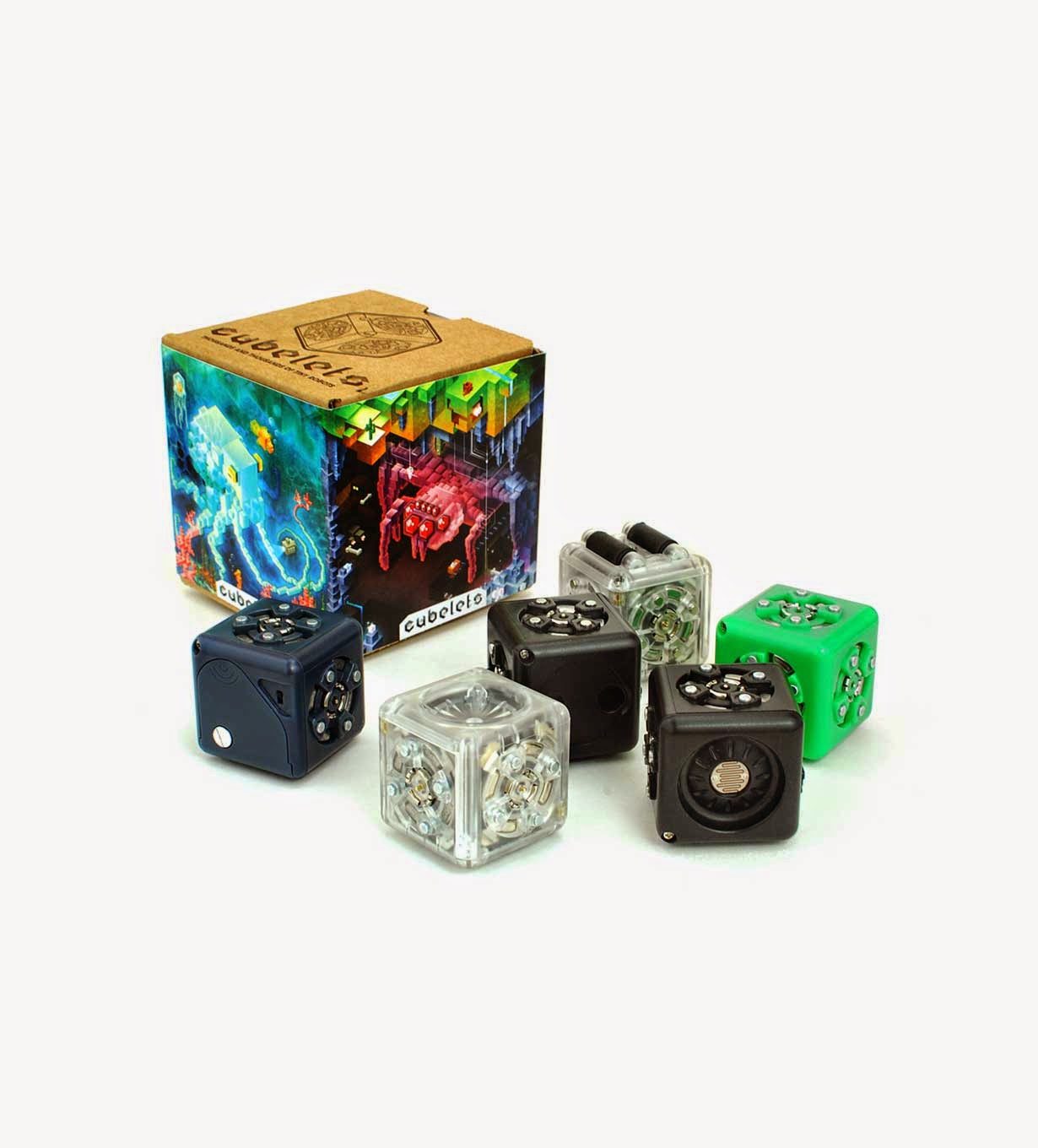
Mini Droid Experimentation Trial – We picked up a Cubelet set last year for this Little Engineer program. Tiny mini robots fit right into our Star Wars theme.  Now I have gotten two uses for these expensive toys.


Augmented Limb Trial – The Zoob Jr. set came in the same preschool robotics kit we bought last summer that contained the Cubelets. I thought I could make them work in the Star Wars theme.  It met with variable success.  About half the kids experimented with them and about half could not figure out what to do with them. 

In the center of the room on the floor was our building zone.  I brought out three different building toys the library already owned and gave them a Star Wars twist.  Although I made a suggestion of what to build with the naming of each toy, I let the children build whatever they wanted. 

Death Star Straw Connector Trial – These Straw Connector toys are rather inexpensive and have come out in many library programs.

Lego Duplo Space Fighter Trial – We decided to use Duplos rather than everyday Legos because we were afraid children would never leave the Lego area.

Wood Blocks Moisture Evaporator Tower Trial – Children are always creative with a variety of wood blocks to play with. 

Reflections - I found that most children this age actually know very little about the Star Wars universe.  They might know some basic characters and star ships, but most have not seen any of the movies.  The parents on the other hand, they know all about Star Wars.  I think I had 5 different parents ask me if they could use the activities from this program in upcoming birthday parties for their kids.  I consider that type of request to be a compliment.  

Saturday, November 29, 2014

Read for the Record with Bunny Cakes

On October 21, my library participated in Jumpstart's 2014 Read for the Record nation-wide campaign to set a new world record for the greatest number of people reading the same book on the same day.


The book of choice this year was Bunny Cakes by Rosemary Wells.  A perfect choice for an audience of 3 to 7 year olds.  After the reading, we put out some activities to extend the fun.

Writing activity - We put butcher paper up on one wall with the words "Shopping List" at the top.  We invited the children to add to Ruby's shopping list by writing or drawing or gluing pictures cut out of magazines.

Art activity - We made simple bunny ear headbands that the children decorated with color pens and stickers.

Math activity - Max dumped all of the birthday candles, silver stars, hearts, and roses into one box.  We asked the children to sort these decorating supplies into their marked bowls.  (We actually used beads for the stars, hearts, and roses because they can be used again for a future program.)

Gross motor activity - Toss "Red Hot Marshmallow Squirters" (bean bags) into a stand up drawing of Max's cake (we cut holes into the cake drawing).

This program turned into a fun celebration of two well known characters, Max and Ruby!


Wednesday, October 15, 2014

Little Engineers: Ready to Read

An introduction to technology and engineering skills for young learners (ages 3-6 years old).  Using simple robots and engineering manipulatives to explore STEM (Science, Technology, Engineering, and Math) concepts.
WHY?  The following activities encourage fine-motor strength and coordination in a STEM environment.  Children practice hand-eye coordination when they reach for, touch,and hold objects purposefully.  They use fingers and whole-arm movements to manipulate and explore objects.  All of this prepares them for reading and working in a school classroom.

After a short story, caregivers and their children were invited to visit each station with a check list
(simplified below).  When done visiting each station, the children received a special treat (we gave out pencils left over from Halloween trick or treating).  This checklist was particularly helpful in spreading everyone out throughout the room and to all of the stations.  The mini robot station could only handle 2 families at a time.  We didn't want everyone crowding this fun station when there were plenty of other activities to do.  The checklist spelled out all the different activities to do while waiting their turn for the robots.

Scissor Station: Apply scissor technology to cut patterns in paper which strengthens small muscles in hands.  

Design a Robot Station: Use craft foam shapes and glue to design a personal robot.  Name and describe the shapes used. Utilize these simple shapes to form larger shapes or images.

Mini Robot Station: Develop scientific investigation skills by constructing a small robot using cubes that perform various tasks.  (Cubelets that came in an engineering kit from Hatch Early Learning.)

Connect the Pieces Station: Explore and investigate ways to make something happen by working with the Zoob Jr. manipulatives to build robot-like figures using diverse parts and joints.  (The Zoob Jr. pieces were also part of the Hatch kit.)

Build Station:  Support fine-motor skills by demonstrating engineering and building techniques with varied opportunities and materials.
- Straw Connectors
- Lego Duplos
- Wood blocks

Overall, this program was easy to create.  My library did spend some money on the Hatch kit, but this program could be recreated without the kit.  The building station and the mini-robot station were equally popular.  The Cubelets were fun to explore, but we only bought 2 sets because of the cost.  We are now trying to figure out how to use these robots in a program for older kids.